Empowering researchers for Open RRI: the PATTERN Project’s first learning cycle
Pietro
Rigonat,
Dec. 4, 2025, 12:10 p.m.
The PATTERN project (“Piloting open and responsible Activities and Trainings Towards the Enhancement of Researchers Networks”) is a 42month Horizon Europe coordination initiative aiming to embed Open and Responsible Research and Innovation (Open RRI) principles into researchers’ professional lives. By co-creating and piloting high quality training modules across its network of academic and research institutions, PATTERN seeks to empower researchers at all stages of their careers within the European Research Area (ERA).
Objectives and methodology
PATTERN’s work is organised into four iterative phases:
Consolidation of knowledge: mapping and assessing over 500 existing Open RRI training resources, while analysing relevant EU, national and institutional policies.
Co-design and piloting: development of modular training paths in eight key Open RRI transferable skill areas.
Testing: implementation of training activities at 14 pilot organisations.
Policy development: translation of the insights gathered into strategic recommendations.
How it started: the mapping of Open RRI training activities
The PATTERN project began with a comprehensive mapping exercise led by Aarhus University (AU), which laid the basis for the development of its training modules and materials. The objective of this initial phase was to analyse the existing landscape of Open Science (OS) and Responsible Research and Innovation (RRI) training opportunities for researchers across Europe. This exercise aimed to identify gaps and areas for improvement in current training offerings, ensuring that subsequent training content would be tailored to the specific needs of researchers and aligned with European policy frameworks.
The mapping exercise was a collaborative effort involving the entire PATTERN consortium, bringing together experts from various partner institutions. This initial step involved extensive desk research, gathering information on training resources, and consulting with stakeholders through surveys, interviews, and Mutual Learning Events (MLEs). The mapping focused on eight key transferable skills areas within OS and RRI: Open Access, FAIR data management, Citizen Science, Research Integrity, Gender equality and inclusion, Dissemination and exploitation of results, Science Communication and Management and leadership.
The exercise collected a wealth of information, identifying over 500 training resources across these themes. These resources ranged from courses and e-learning modules to webinars and static materials such as guides and reports. Both formal and informal training methods were considered and the resources were mapped for relevance, accessibility and suitability for different target audiences.
A key aspect of this mapping was the metadata collection, where standardised descriptors were used to catalogue training resources. This enabled a detailed analysis of the content covered, the expertise level targeted (from beginner to advanced) and the formats used. By collecting this data, the team at AU was able to provide a clear picture of the training landscape, identify overlaps and gaps in coverage and determine the types of training most needed.
Moreover, the mapping exercise provided valuable insights into the current trends and best practices in the training field, particularly in terms of technology, pedagogical approaches and audience needs. The exercise also highlighted the quality of existing resources and informed the development of new training materials that would later be piloted in the first learning cycle.
This exercise was not only a foundational step in the PATTERN project but also a critical component in shaping the direction of the training content that followed. It ensured that the training modules developed in the subsequent phases would be data-driven, addressing identified needs and filling gaps in the existing training landscape, while also contributing to the wider adoption of Open RRI principles across the European Research Area. You can access the whole report here.
First learning cycle: themes, pilots & outcomes
Starting from the mapping exercise, PATTERN co-designed modular training and modules that, from June 2024 to June 2025, were delivered to Pilot institutions in its first learning cycle. Each theme was piloted by a selected organisation across Europe, ensuring a diversity of contexts and approaches, more specifically:
Citizen science
Pilot organisations: AU, UniSR, TDC, UHelsinkiù
Participants: 104
This course provides an introduction to Citizen Science (CS) and offers practical guidance on participant recruitment and community engagement, drawing on insights and tested materials from the PATTERN project’s first learning cycle. The course is structured around two core modules:
Introduction to Citizen Science. This foundational module is designed for researchers, educators and community stakeholders who are new to Citizen Science and wish to explore its potential as a participatory research approach. It provides a clear and accessible overview of the evolution of Citizen Science, the different levels of participation it involves, and the widely recognised ten principles that underpin it. The module places Citizen Science within the broader context of Open Science and Responsible Research and Innovation (RRI), highlighting its capacity to promote societal relevance, equity, and co-creation between academics and citizens. Throughout the session, participants engage with real-world case studies, including projects such as Stall Catchers, FoldIt, Find foråret, and the Pisuna Program, which illustrate the diverse ways in which citizens contribute to knowledge production, data collection and even evaluation processes.
Participant coordination and community engagement. Building upon the introductory module, this intermediate-level session focuses on the practical dimensions of designing and managing Citizen Science initiatives. It addresses the challenges and strategies involved in recruiting and retaining volunteers and offers guidance on building inclusive, trust-based relationships with community participants. Special attention is given to ethical considerations and cultural sensitivity, both of which are essential for maintaining engagement and ensuring mutual respect throughout the life cycle of a project. Drawing on experiences from pilot sessions, the module incorporates co-design methodologies to help learners apply these concepts to their own project contexts. Participants are invited to reflect on communication techniques, participatory decision-making and the importance of feedback loops. The module concludes with project-based learning tasks that guide learners through the initial planning stages of a Citizen Science initiative, supported by regionally grounded case studies.
Research integrity
Participants: 80
Pilot organisations: AU
This course offers a comprehensive introduction to the principles of research integrity and good scientific practice (GSP), equipping researchers and research professionals with the essential knowledge and tools to navigate ethical challenges and uphold high standards in their work. The course reflects a competency-based, practice-oriented approach grounded in real-world cases and feedback from institutional settings across Europe.
The course explores key areas such as research ethics, data management, authorship, plagiarism, conflicts of interest, responsible supervision and open science. It also addresses emerging topics in the field, including current developments in European and international regulatory frameworks and the broader role of research integrity within the Open Science and Responsible Research and Innovation (RRI) agendas.
A distinctive feature of the course is its emphasis on interactive, case-based learning. Participants are encouraged to engage critically with authentic scenarios drawn from diverse disciplines, enabling them to identify ethical dilemmas, reflect on best practices and apply GSP principles in context. Delivered through a mix of synchronous and asynchronous formats, including recorded sessions, presentations, editable slide decks and reflective exercises, the course promotes active learning and supports learners in becoming informed, responsible actors in their institutions.
The course was tested across several European institutions and adapted to reflect the varied needs of early-career researchers, PhD students and support staff. A Train-the-Trainer format has also been developed to ensure wide uptake and institutional sustainability, allowing participants to act as knowledge multipliers and support a culture of integrity within their own research environments.
Open access
Pilot organisations: OpenAIRE, IZTECH, RBI, Udebrecen
Participants: 80
This course offers a structured and practical overview of Open Access (OA) publishing, designed to help researchers confidently navigate the evolving landscape of scholarly communication. The course responds directly to gaps identified in existing training resources, particularly the need for intermediate and advanced-level content, blended formats and practical guidance aligned with funder requirements.
The course introduces learners to the core principles and benefits of Open Access, explaining how it contributes to more equitable knowledge sharing, increased research visibility, and compliance with Open Science mandates. Particular emphasis is placed on the expectations of Horizon Europe, national funding bodies and institutional policies, with detailed guidance on how to meet reporting requirements and align research workflows accordingly.
Participants could explore the economic and societal rationale behind OA, different publishing models, including green, gold and diamond routes and how to assess which strategy best suits their discipline and project. The course also helps researchers understand and apply rights retention strategies, enabling them to retain copyright, choose appropriate licensing (such as Creative Commons) and make informed decisions about where and how to publish.
A dedicated module on open peer review examines the principles, opportunities, and potential pitfalls of transparency in the review process. Learners are invited to critically reflect on their roles both as authors and reviewers and how responsible reviewing practices can strengthen research integrity and reproducibility.
The course also tackles the challenge of predatory publishing. Researchers are equipped with practical tools to identify trustworthy publishers and avoid misleading platforms, safeguarding the quality and credibility of their scholarly work. Real-life examples and exercises help participants assess journal policies, editorial practices and indexing standards, fostering critical awareness and due diligence in the publishing process.
The course draws on hands-on experiences from virtual workshops, self-paced sessions and face-to-face activities. Resources include translated materials in multiple languages, downloadable guides, interactive tools such as Mentimeter and case-based exercises.
By the end of the course, participants will have acquired the knowledge, practical skills and confidence needed to make informed, responsible and strategic decisions about Open Access publishing, contributing to a more transparent and accessible scientific ecosystem.
Dissemination & exploitation of results
Pilot organisations: SISSA, UniSR, IZTECH
Participants: 51
This modular course has been developed to strengthen researchers’ capacity to plan and implement effective dissemination and exploitation (D&E) strategies, with a particular focus on Horizon Europe proposals and project implementation. Rooted in the practical realities of EU-funded research, the course equips participants with the tools and insights needed to communicate research results to target audiences, maximise impact and contribute to long-term value creation beyond the lifespan of a project.
The course responds to the growing need for researchers to understand and fulfil their communication, dissemination and exploitation obligations, not as administrative requirements, but as essential pathways to foster societal, economic and scientific impact. Drawing on real-life examples and excerpts from Horizon Europe proposals, participants engage with a mix of conceptual overviews and hands-on exercises that demystify the process of planning and executing a coherent CDE strategy.
The training introduces key concepts such as the difference between communication, dissemination and exploitation and their respective roles within the research lifecycle. It explores how to define concrete objectives, identify relevant stakeholders, choose appropriate channels and tailor messages to diverse audiences including policymakers, industry, civil society, and the general public.
A core element of the course is its use of interactive learning, grounded in Horizon Europe case studies. Through scenario-based activities, participants learn how to pitch research outcomes, craft compelling narratives and use social media to increase visibility and stakeholder engagement. In addition, the course offers guidance on intellectual property management, open access requirements and how to connect exploitation planning with the development of business models, uptake strategies and policy recommendations.
Structured in two modules and four independent yet interconnected lessons, the course allows for flexible engagement: participants can follow the entire curriculum or select individual components most relevant to their experience or professional needs. It is particularly tailored to doctoral and postdoctoral researchers but is equally beneficial for early-career researchers involved in EU research projects. A basic understanding of the Horizon Europe Framework Programme is recommended to make the most of the course content.
The PATTERN curriculum also envisions further integration of this course into institutional learning ecosystems through future Train-the-Trainer adaptations and blended learning opportunities.
FAIR research data management
Pilot organisations: DANS, IZTECH, Heal-LINK, RBI, UMinho, UDebrecen
Participants: 60
This course provides researchers with a structured and practice-oriented introduction to the principles and application of FAIR Research Data Management (RDM). Rooted in the FAIR principles (Findable, Accessible, Interoperable and Reusable) it equips participants with the necessary understanding and tools to manage research data in a way that enhances transparency, reproducibility and long-term usability.
The course has been piloted across several European research institutions and adapted to the needs of early-career researchers, PhD students and data support staff. It responds directly to identified training gaps by offering a modular, blended learning approach that combines theoretical foundations with real-world application.
The course consists of five progressive sessions. It begins with an introduction to the FAIR principles, examining their origin, significance and relationship with Open Science. This is followed by a session on planning for FAIR data through the creation of Data Management Plans (DMPs), with a focus on aligning with funder requirements and institutional policies.
Subsequent sessions delve deeper into practical implementation. Participants explore how to manage metadata, choose appropriate file formats, use persistent identifiers (PIDs) and work with knowledge organisation systems. The course also addresses key considerations around data licensing, repositories, data citation and research integrity, providing a comprehensive framework for responsible data stewardship.
Throughout, learners are actively engaged through interactive discussions, guided exercises and project-based learning. A unique feature of the course is its use of study cases (real-world scenarios) which allow participants to apply FAIR principles within a structured research project. To support institutional capacity building, all training materials, including annotated slides, facilitator guides and Train-the-Trainer resources, are made available via PATTERN’s digital ecosystem. The course can be delivered face-to-face, virtually, or through self-paced modules, offering flexibility for both individual learners and organisations aiming to embed FAIR RDM in their research practices.
Gender equality, non-discrimination & inclusion
Pilot organisations: LPI, UHelsinki, UniSR (course developed with support from ESF)
Participants: 67
This course offers a comprehensive introduction to the principles of gender equality, non-discrimination and inclusion (GNI) within the context of research, with a strong emphasis on both conceptual understanding and practical application. The course is grounded in the recognition that inclusive, reflective and equitable research practices are fundamental to scientific excellence and societal relevance.
The course is structured in two parts, each addressing key dimensions of GNI in research. The first part, Introduction to Gender Equality and Non-Discrimination, provides a conceptual foundation by exploring the nature of power dynamics, the role of unconscious bias and how privilege manifests in research settings. Participants are introduced to the structural and systemic dimensions of inequality, as well as their intersection with scientific cultures and disciplines. Drawing on real-life examples and participatory activities, this part invites learners to reflect on their own positionality and research environments.
The second part, Application in Research and Institutional Environments, focuses on embedding gender awareness into the full research cycle. Topics include gender-sensitive research design, inclusive data collection and analysis and strategies to identify and mitigate bias in team composition, funding access and knowledge production. It also addresses institutional approaches to equality, such as Gender Equality Plans (GEPs) and examines how policies and frameworks can support structural change across academia.
The course adopts an innovative pedagogical approach, combining design thinking, project-based learning and reflective practices to ensure that participants not only grasp theoretical concepts but are also equipped to apply them in diverse disciplinary and institutional contexts. It is structured into multiple modules, allowing flexibility for learners to engage with the material at their own pace or through facilitated sessions.
The course has been adapted to the needs of early-career researchers, project coordinators and academic staff. Case examples from partner institutions have informed its development, and further Train-the-Trainer materials are being prepared to expand its reach during Learning Cycle 2.
Science communication towards media & policy makers
Pilot organisations: RBI, UniSR, SISSA
Participants: 86
This course offers a practical and accessible introduction to science communication, focusing on how researchers can effectively engage with non-scientific audiences, including journalists, policymakers and the wider public through traditional and digital media. The course has been carefully designed to build foundational skills in communicating complex research in clear, compelling and socially relevant ways.
The course is composed of five independent modules, each focusing on a core area of science communication. It begins with an overview of the field, introducing participants to the principles and objectives of science communication and its vital role within the broader Open Science and Responsible Research and Innovation (RRI) agenda. The subsequent modules offer targeted training on how to write for the media, engage in interviews and conversations with journalists, use social media strategically and communicate research insights effectively to policymakers.
Each module blends theoretical background with practical activities. Participants learn how to adapt their language and messaging to suit different audiences, structure clear and engaging narratives and use storytelling techniques to highlight the societal relevance of their work. Exercises include writing media-friendly press releases, simulating interviews, developing social media content and preparing policy briefs. Group discussions and peer feedback are incorporated to foster collaboration and critical reflection.
The course requires no prior experience in science communication and is particularly suitable for early-career researchers and PhD students looking to develop their public engagement skills. During PATTERN’s first learning cycle, the modules were tested in both online and face-to-face settings, with positive feedback on the relevance and usability of the content.
In the upcoming learning cycle, Train-the-Trainer resources will be introduced to further support institutional uptake and integration into formal training programmes.
By the end of the course, participants will be better equipped to communicate their research with confidence and clarity, improve its visibility and contribute meaningfully to public dialogue and evidence-informed policymaking.
Mental health leadership for early career researchers
Pilot organisation: SciLink
Participants: 33
This course has been developed to support early career researchers (ECRs) in understanding and addressing mental health challenges within academic environments. The course adopts a holistic approach to mental health, recognising its personal, institutional and systemic dimensions. It aims to empower ECRs not only to manage their own wellbeing but also to become active agents of change in promoting healthier research cultures.
Structured into three half-day modules, the course offers a progressive yet flexible learning path. Participants may complete the full programme or engage with individual modules depending on their needs and availability. The first module provides a comprehensive introduction to mental health in academia, exploring the individual pressures faced by researchers (such as precarious contracts, isolation, and performance expectations) as well as the broader contextual factors that shape wellbeing. It encourages self-reflection and awareness, offering tools for resilience and coping strategies tailored to the research environment.
The second module turns attention to institutional practices, focusing on how to create supportive, inclusive and stigma-free workplaces. Participants learn how to identify risk factors and enablers at the organisational level and how to contribute to peer support networks, mentoring schemes and mental health literacy initiatives. The course advocates for a collective approach to wellbeing, where researchers work together as allies to foster a compassionate and connected academic culture.
The third module explores mental health as a systemic issue, highlighting the structural challenges that impact ECRs at national and international levels. Through discussion of relevant policy frameworks and advocacy tools, participants are invited to consider their role in shaping research environments that are sustainable and humane. Themes include mental health in the context of research funding, mobility, career progression and equity, as well as the importance of institutional strategies and sector-wide interventions.
The course was initially piloted as a two-day hybrid workshop, combining in-person interaction with live online participation. This format allowed for deeper peer exchange while ensuring accessibility across institutions and countries. Drawing on PATTERN’s project-based learning methodology, the training incorporates real-life scenarios, open discussions and reflective exercises that encourage dialogue, empathy and leadership development.
In the future, the course will be supported by Train-the-Trainer materials, allowing institutions to replicate and adapt it within their own professional development programmes. By the end of the course, participants will have strengthened their ability to recognise and respond to mental health challenges, advocate for supportive practices and lead change towards a more inclusive and caring research ecosystem.
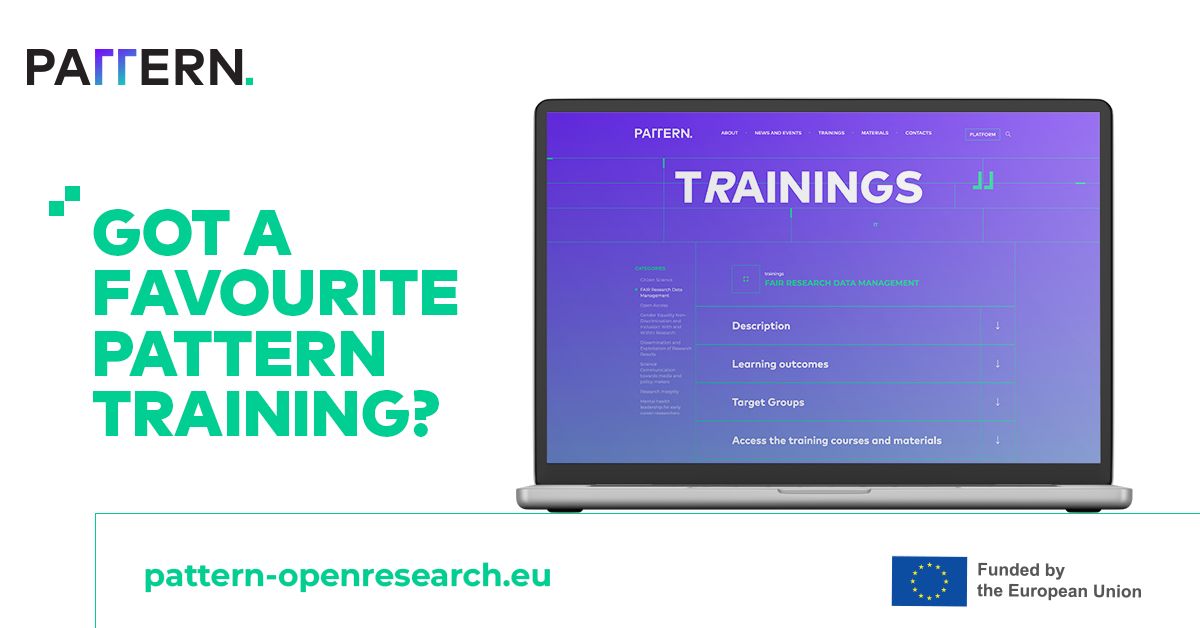
You can explore all PATTERN trainings here.
You can visit PATTERN platform here.
You can access all project-based learning materials here.
Learning cycle I in numbers
Total participants: 561
Most represented group: PhD students and postdocs (approx. 65%)
Training formats: Blended learning (45%), online self-paced (35%), in-person (20%)
Overall satisfaction rate: 87% rated their learning experience as good or excellent
You can get an overview of the whole 1st learning cycle here.
Evaluation & refinement strategy
Refinement and evaluation insights
The PATTERN project demonstrates its commitment to iterative improvement by integrating continuous evaluation into its training programs. As highlighted in D3.3 Evaluation of outcomes and refinement strategy, the project’s evaluation framework uses a multi-method and multi-dimensional approach for assessing participants’ perceptions of the trainings, satisfaction, and learning outcomes as well as the training facilitators’ perspectives. The framework also focuses on long-term impacts such as changes in institutional practices for assessing understanding of Open RRI principles on a broader level.
The evaluation methods employed (such as post-training surveys,interactive evaluation activities with participants and feedback from trainers) enable continuous assessment of training quality and allow for meaningful adjustments during the project’s course. This approach ensures periodic refinements to align the project's objectives with the evolving needs of its participants. Through this approach, trainings can be periodically assessed and adapted thereby promoting the sustainable embedding of Open RRI principles into researchers’ professional lives.
Feedback and adaptations
The results from the first round of pilot trainings, as outlined in D3.3, have been integral to refining the project's training design and delivery. Participants expressed satisfaction with the content's relevance and practicality, while some areas for improvement emerged, particularly regarding the size of training groups and the interactivity of sessions. As a result, PATTERN has adapted its approach, prioritising smaller, more focused groups for the second training cycle. Additionally, feedback revealed the need for more tailored content for early-career researchers and students. While participants appreciated the general approach, those earlier in their careers often found some of the content less suitable for their needs. To address this, PATTERN has incorporated more foundational material and peer-mentoring opportunities into the second cycle, ensuring that the training meets the needs of all career stages.
Importantly, the feedback also emphasised the need for more flexible and engaging formats. Participants found that interactive sessions helped build a deeper connection with the content, resulting in greater satisfaction and retention. In response to these insights, the second cycle will include additional interactive modules and tools to support personalised learning pathways, encouraging increased participation and engagement.
Focus on inclusivity and flexibility
Another significant theme highlighted in D3.3 was the project's flexibility in adapting its training to diverse learning preferences and formats. Given the varied backgrounds and career stages of the participants, the ability to deliver training in multiple formats (including in-person, online and hybrid) was critical to the project's success. As noted in the evaluation report, flexibility in content delivery was highly valued by participants, particularly those with competing professional commitments.
The report also highlighted the positive reception of the training's inclusive nature. For instance, trainings addressing gender equality, non-discrimination and inclusion were found to resonate particularly well with diverse participant groups, encouraging both reflection and action. As PATTERN moves into the second cycle, additional focus will be placed on ensuring that all materials are accessible to a wide range of participants, including those with disabilities and those from underrepresented groups.
Tracking and real-time adaptation
At the core of PATTERN’s success is its approach to real-time adaptation. Through regular evaluations, such as surveys and interactive activities, , the project is able to identify areas for improvement while training is still underway. This real-time feedback mechanism allows PATTERN to refine its modules and tools as the project progresses, ensuring the relevance and impact of each session.
In particular, the feedback on the Projects platform highlighted the need for more streamlined integration with training activities. While the platform is a key resource for engaging participants and tracking their progress, its usability was rated lower in the first cycle. In response, PATTERN is refining the platform’s features and ensuring its compatibility with different learning formats. The second cycle will introduce additional AI-driven tools and personalized learning paths to further enhance the digital learning environment, making it more flexible and responsive to the needs of each participant.
As the project moves forward, the integration of AI-driven learning tools, more advanced FAIR data modules and a deeper dive into inclusive citizen science will address gaps identified in the first cycle. This continuous improvement strategy not only benefits participants but also contributes to broader policy recommendations that will further embed Open RRI principles into the European Research Area.
Cycle II & policy recommendations
Cycle II of the PATTERN project builds upon the first cycle’s findings and includes a number of enhancements to ensure its robustness and inclusivity. These improvements incorporate deeper modules on FAIR metadata, Intellectual Property (IP) management, Open Access strategies, inclusive citizen science frameworks, gender dimension in research funding applications and intersectional inclusion. These updates are in direct response to the feedback from the first learning cycle and will provide researchers with more advanced tools to integrate Open RRI principles into their work. New AI features, interactive modules and personalised learner paths will also be integrated into the PATTERN digital ecosystem via OpenPlato, ensuring a more flexible and engaging learning environment.
As highlighted in the D4.1 State-of-the-Art Analysis, the policy mapping for learning opportunities in Open RRI at the EU, national and institutional levels has identified several gaps to be be addressed in Cycle II. Notably, there is a need for strengthening the institutional integration of Open RRI training within academic curricula and formal educational pathways, as well as more robust funding mechanisms to support long-term sustainability. To address these gaps, the second cycle will feature, inter alia, the multilingual delivery, refined content and trainer toolkits aimed at equipping trainers with the resources necessary to implement high-quality, context-sensitive training.
In addition to content enhancements, Cycle II also strengthens the alignment of the training modules with the EU policy frameworks, as outlined in D4.2 First PATTERN Policy Brief, published in April 2024. The EU policies, particularly those focused on gender equality, research integrity and FAIR data principles, provide a clearer framework for aligning institutional practices and curricula with the broader goals of Horizon Europe. This will ensure that the modules not only contribute to researchers' professional development but also prepare them to meet the evolving demands of the European Research Area (ERA).
As outlined in D4.3 Second PATTERN Policy Brief, published in April 2025, institutional incentives and structural enablers are essential to support the mainstreaming of Open RRI skills training across Europe. The brief proposes actions to integrate Open RRI principles more effectively into academic frameworks, focusing on the importance of cross-disciplinary collaboration and intersectoral mobility for researchers. These recommendations will also aim to foster a culture of inclusive research practices and social responsibility across European research institutions.
The project’s policy insights were also included in a series of policy podcasts.
Building upon the lessons learned from Cycle I, the PATTERN project’s second cycle will enhance the training modules themselves and also foster stronger synergies between institutional and national policies, contributing to the long-term institutionalisation of Open RRI as a core component of research training and professional development.
Don’t miss our recent Workbook: Mapping of Training resources on Open RRI. Discover more than 500 training resources across eight Open RRI skill areas.
PATTERN is funded by the European Union under Horizon Europe (Grant No. 101094416).
For media inquiry contact: info@pattern-openresearch.eu.
Pietro Rigonat, PATTERN Project Manager