COMMONAIR - COMmon Measurements ONsite in the AlpIne Region
from 01/01/2025 until 31/12/2026
The Alpine Region is among the areas most affected by climate change in Europe. Rising temperatures, increasing heat stress and persistent air pollution represent significant risks to public health, environmental quality and liveability, particularly in cities located in mountain basins. Despite solid scientific evidence on these impacts, a gap remains between available knowledge, public awareness and effective policy implementation at local level.
The COMMONAIR project addresses this gap by promoting a participatory approach to monitoring and understanding urban microclimates in the Alpine Region. The project focuses on the local-scale observation of temperature, thermal comfort in public open spaces and air quality through on-site measurements. These activities are carried out jointly by citizens, research institutions, civil society organisations and local authorities.
By actively involving citizens in data collection, interpretation and discussion, scientific knowledge is directly connected to local decision-making processes. This supports evidence-based policies while increasing public awareness and engagement in climate adaptation measures.
COMMONAIR is designed as a governance innovation project. It fosters both vertical integration across local, regional and transnational levels and horizontal cooperation among administrations, researchers, stakeholders and citizens. Through transnational exchange among Alpine cities and regions facing similar challenges, the project enhances the transferability of methods and results and strengthens long-term adaptive capacity in the Alpine Region.
This project is co-funded by the European Union through the Interreg Alpine Space programme.
404.531 EUR
Aim
The overall objective of COMMONAIR is to strengthen climate-resilient urban development in the Alpine Region by improving the interaction between science, citizens and public authorities. To achieve this goal, the project pursues the following specific objectives:
First, the project aims to improve the availability and quality of local data on urban microclimates. Citizen-based measurements of temperature, air quality and thermal comfort generate high-resolution datasets that complement existing official monitoring systems.
Second, COMMONAIR seeks to enhance evidence-based decision-making at municipal level. The jointly collected and analysed data provide a solid foundation for informed discussions and for the design of effective climate adaptation measures in the fields of urban planning, public health and environmental policy.
Third, the project aims to increase citizen awareness, knowledge and willingness to act on climate adaptation. By engaging diverse target groups such as students, NGOs and local communities, COMMONAIR strengthens understanding of climate impacts and builds support for local adaptation strategies.
Fourth, the project contributes to the development of innovative governance models. By systematically involving citizens and stakeholders in climate-related data generation and policy dialogue, new forms of cooperative and inclusive governance are tested and consolidated.
Finally, COMMONAIR aims to reinforce transnational cooperation in the Alpine Region by sharing experiences, tools and results, thereby improving the scalability and long-term impact of the project outcomes.
How to participate
People can get involved in the project through mobile measurements along individual pathways chosen autonomously by participants within the defined pilot area. This form of participation is designed to be inclusive and flexible, accommodating different levels of interest, knowledge and availability. The project actively encourages the involvement of citizens, students, schools, civil society organisations and local associations, ensuring that engagement is accessible, meaningful and impactful.
Participation begins with outreach and information activities organised at local level, such as public meetings, workshops and interactive seminars. These events introduce participants to the objectives of the project, key climate-related challenges in their area and the role of citizen involvement in addressing them. No prior technical expertise is required, as all necessary knowledge is provided during these sessions.
Interested participants are then invited to take part in citizen science measurement campaigns. With the guidance of researchers and environmental experts, participants are trained to use simple and reliable monitoring tools to measure temperature, thermal comfort in public spaces and, where relevant, air quality. Measurements are carried out in everyday settings such as streets, squares, schoolyards, green areas and residential environments, allowing citizens to contribute data that reflects lived experiences.
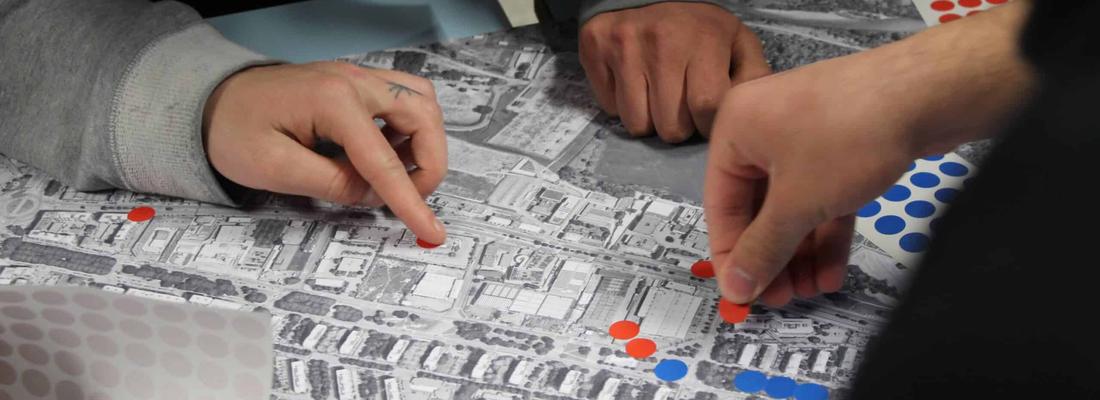
Beyond data collection, participants are involved in interpreting and discussing the results. Through co-mapping exercises, round tables and local dialogue sessions, citizens collaborate with scientists, municipal staff and other stakeholders to analyse findings, identify local “hot spots” and reflect on possible adaptation measures. This process ensures that citizen-generated data directly informs local debates and planning processes.
Participants can also engage in co-design activities, contributing ideas for climate adaptation actions and governance solutions tailored to their local context. In the later stages of the project, motivated individuals and groups may become part of longer-term cooperation frameworks, such as local agreements or community-based monitoring initiatives, enabling continued involvement beyond the project lifetime.
Overall, the project offers multiple entry points for engagement, empowering people to contribute according to their interests while fostering shared responsibility for climate adaptation in Alpine cities.
Needed equipment
The project requires only a limited amount of equipment in order to ensure low-threshold and accessible participation for a wide range of users.
Measurements are carried out using MeteoTracker devices, which are portable sensors designed for mobile monitoring of environmental conditions. For the duration of the measurement activities, MeteoTrackers are provided on loan by the project team at TU Wien. Participants are therefore not required to purchase any measurement equipment themselves.
In addition, participants need a personal smartphone (Android or iOS) on which the MeteoTracker application is installed. The smartphone is used to connect to the MeteoTracker device, record measurement data and associate it with time and location information along the chosen pathways. A mobile internet connection during the measurement is not mandatory, as data can be stored locally and uploaded later; however, an active connection is recommended to facilitate real-time data transfer and troubleshooting if needed.
Where relevant and depending on the pilot area, participants may also borrow an Air Quality Module as an optional add-on. This module allows the monitoring of selected air quality parameters and complements the microclimatic measurements collected with the MeteoTracker.
All equipment is accompanied by clear instructions and introductory guidance provided by the project team. This ensures that participants can safely and correctly use the devices and understand the purpose of the measurements without requiring prior technical expertise.
About funding
Funding bodies: European Comission
Funding program: Interreg Alpine Space
About branding
Card image by: TU Wien
Banner by: Politecnico di Torino
 Go to project website