Bringing Citizen Science to Public Libraries: Building Bridges Between Research and Communities
Andreja
Vovk Iskrić,
July 9, 2026, 11:44 a.m.
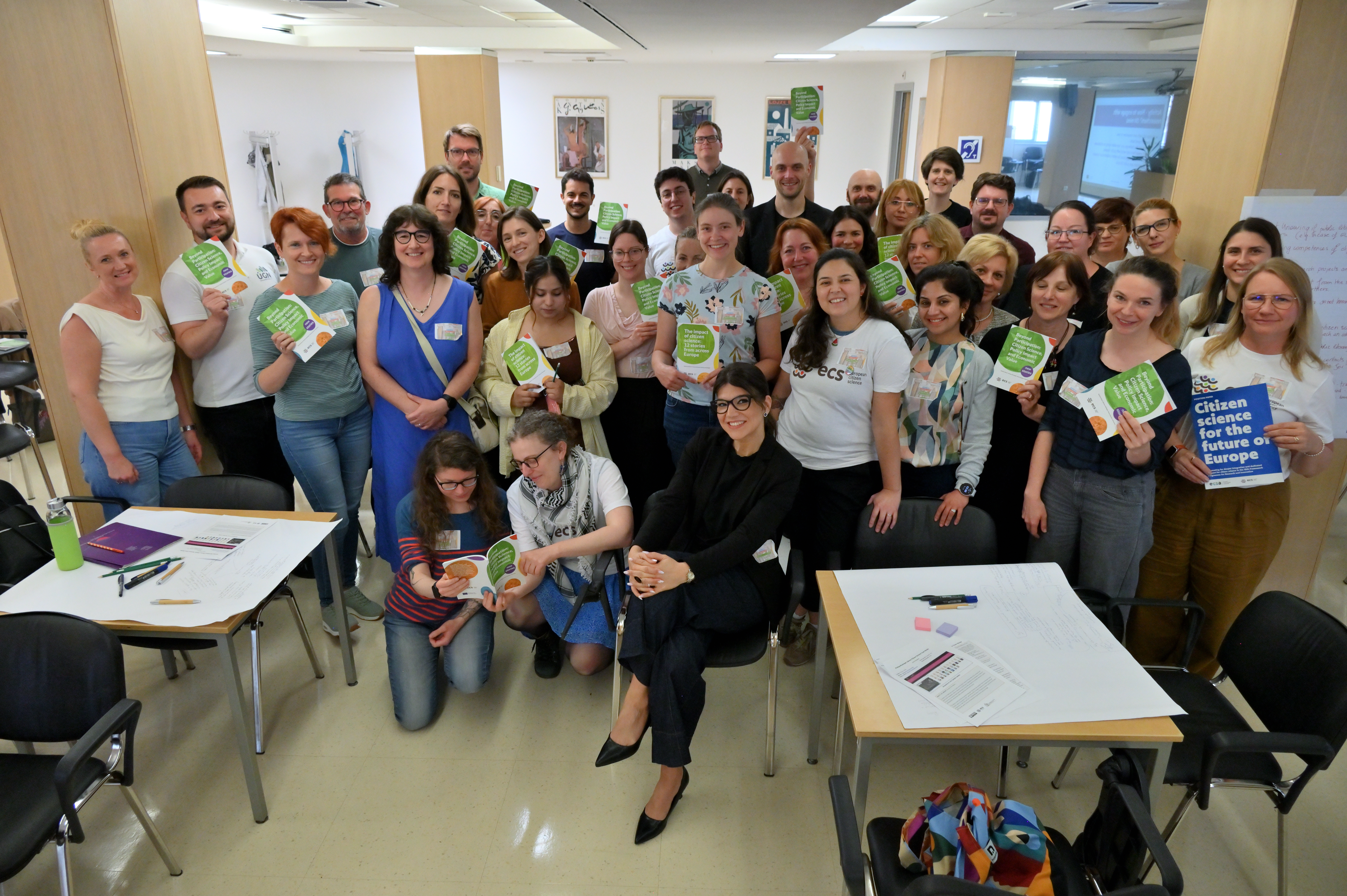
How can public libraries become stronger partners in citizen science? This question brought together researchers, librarians, and citizen science practitioners from across Europe at the event Bringing Citizen Science to Public Libraries, held on 11 June 2026 at Ljubljana City Library, Slovenia. Organised as one of the closing events of the European Citizen Science (ECS) project, the meeting celebrated four years of collaboration while looking ahead to the future role of public libraries in European citizen science.
Public libraries as partners in citizen science
Opening the event, Dr Teja Zorko, Director of Ljubljana City Library, emphasised that science belongs not only in laboratories and universities, but also in neighbourhoods, communities, and libraries. Public libraries are uniquely positioned to support citizen science through lifelong learning, community engagement, public programming, and trusted access to knowledge.
The morning session presented the main achievements of the ECS project, including the EU-Citizen.Science platform, the ECS Academy training programme, and the CitSci Comp competence framework. Together, these resources provide practical guidance, training opportunities, and a shared European framework for developing high-quality citizen science projects. Throughout the presentations, one message stood out: libraries can be active partners in designing, delivering, and sustaining citizen science initiatives.
One of the highlights of the event was an interactive ECS Academy workshop, where researchers and representatives of public and academic libraries reflected on the opportunities and barriers for collaboration.
The discussion revealed that, despite growing interest in citizen science, cooperation between research institutions and libraries is still far from routine. Participants identified a lack of mutual awareness of each other’s roles and abilities as one of the greatest obstacles. While libraries are often still percived mainly as places for books and study, overlooking their expertise in community engagement and public participation, librarians on the other hand, frequently see the research world as difficult to access and struggle to identify suitable research partners, funding opportunities, or entry points into research projects.
Participants stressed that libraries should be involved from the earliest stages of project development rather than being invited only after projects have already been designed. Unfortunately, this is often hindered by rigid funding schemes that do not clearly recognise libraries as eligible project partners or leave little flexibility for building interdisciplinary partnerships. As a result, projects miss valuable opportunities to benefit from libraries’ knowledge of local communities, experience in public engagement, and long-term relationships with citizens.
The workshop also highlighted broader structural challenges, including limited time, funding, staffing, and the lack of clear contact points between research institutions and libraries. Participants suggested that national citizen science networks could play an important coordinating role by connecting researchers with libraries and facilitating new collaborations. They also proposed that organisations should designate dedicated citizen science contact persons to make cooperation easier.
Another recurring theme was trust. High-quality citizen science requires reliable data, which depends on appropriate training for participants and continuous support throughout projects. However, participants emphasised that researchers also need training, not only in project management but also in community engagement, science communication, and working with libraries as equal partners. Successful citizen science ultimately depends on mutual trust, complementary expertise, and long-term relationships between all stakeholders.
The workshop concluded that libraries have an important role far beyond individual citizen science projects. By regularly inviting researchers to public lectures, discussions, exhibitions, and educational activities, libraries strengthen science communication and scientific literacy within their communities. A better understanding of science and greater public trust are essential foundations for meaningful participation in citizen science.
Inspiring examples from Slovenia and Hungary
The afternoon programme opened with a presentation of the Slovenian Citizen Science Network, which showcased its role in connecting researchers, public institutions, civil society organisations, and citizens, while fostering collaboration and supporting the development of citizen science initiatives across Slovenia. The programme then highlighted the diversity of citizen science projects involving public libraries. Some demonstrated how libraries support research by providing infrastructure, organising public engagement activities, and connecting researchers with local communities, while others showed how libraries themselves can initiate and lead citizen science projects. Together, the examples illustrated the wide range of topics in which libraries can play an active role, from biodiversity monitoring and environmental research to preserving local history through community memories and strengthening media and scientific literacy with the help of citizen scientists.
Looking ahead
Although the European Citizen Science project is coming to an end, it has created a strong foundation for the continued involvement of public libraries through practical resources, training, competence frameworks, and a growing European community of practice.
The discussions in Ljubljana made clear that future success will depend on stronger collaboration between researchers, public libraries, and academic libraries. Early involvement of libraries in research projects, effective communication, and greater recognition of each partner's expertise are essential for making citizen science more inclusive and impactful.
An important step in sustaining this collaboration is the establishment of the new ECSA Working Group on Public Libraries. Building on the momentum of the ECS project, the Working Group will provide a space for public libraries to exchange experiences, develop practical guidance, strengthen partnerships, connect with other institutions, and promote the role of libraries in citizen science across Europe.
The ECSA Working Group on Public Libraries welcomes new members from across Europe. Librarians, researchers, citizen science practitioners, and anyone interested in strengthening collaboration between science and society are warmly invited to join.
The discussions in Ljubljana demonstrated that while significant challenges remain, the foundations for stronger collaboration between libraries and the research community are already in place. By building on the resources, partnerships, and networks established through the ECS project, and through the continued work of the ECSA Working Group on Public Libraries, these collaborations can continue to grow, helping make citizen science more inclusive, participatory, and relevant to communities across Europe.
By Andreja Vovk Iskrić