Strengthening Public Engagement in Research
ECS project
July 9, 2026, 11:40 a.m.
What if one of the most effective tools for rebuilding trust in science and democracy has been available to us all along: citizen science?
When the public helps produce the knowledge that informs policy, the effects are measurable: greater institutional transparency, stronger civic skills, and a gradual return of public trust. That matters now more than ever, as confidence in science strains under the weight of disinformation. It also speaks directly to the EU's broader agenda, from the Green Deal to the European Democracy Shield.
Bringing the community together
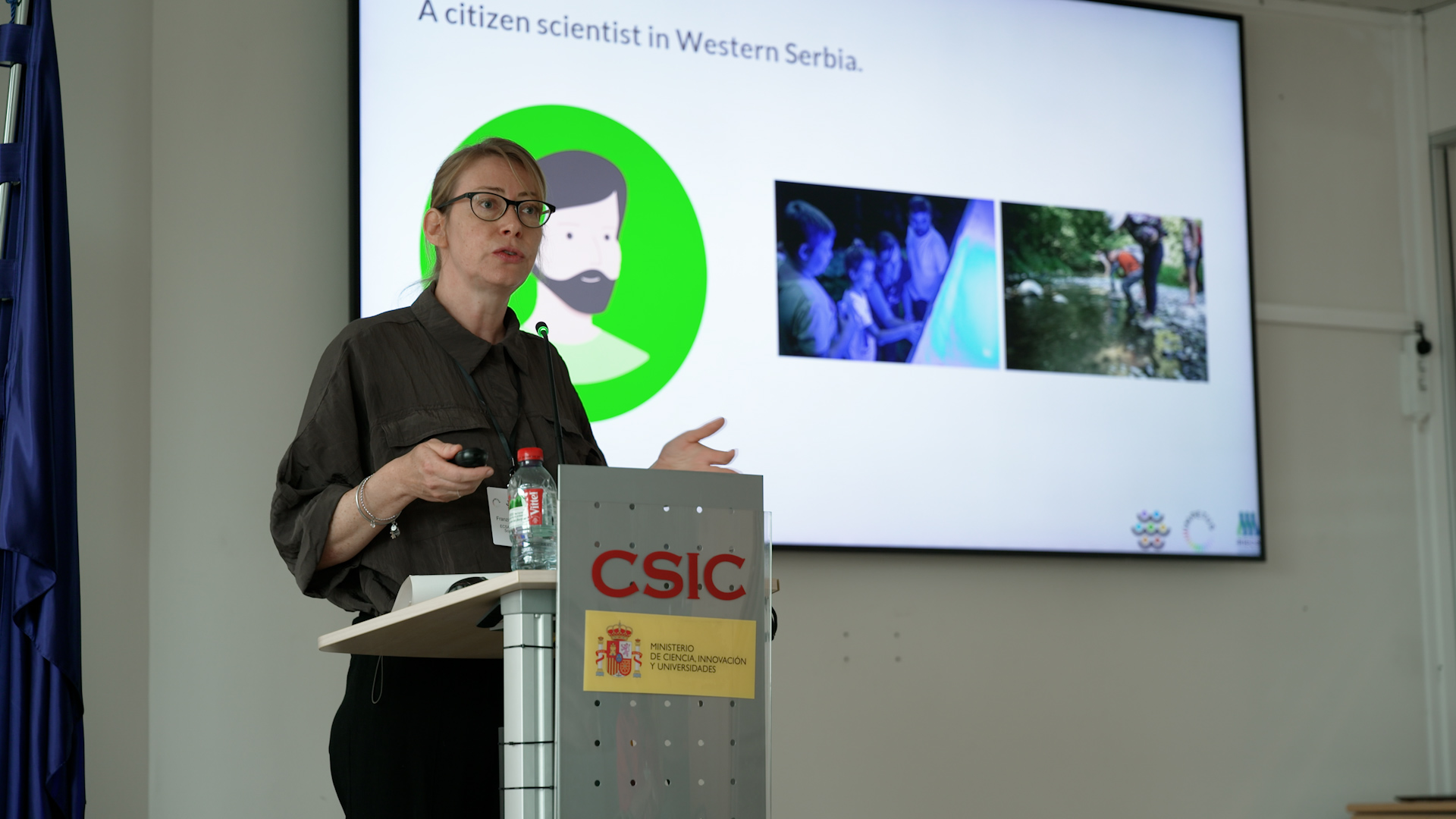
On June 4th in Brussels, three projects, European Citizen Science (ECS), IMPETUS, and RIECS-Concept, brought together a deliberately diverse group: European Commission officials, project coordinators, and representatives from institutions including the German Aerospace Center and the Royal Belgian Institute of Natural Sciences, alongside practitioners working in citizen science day to day. The aim wasn't to preach to the converted about past achievements, but to make a substantive case that citizen science remains an underused force in research and governance.
Grounding the case in real initiatives
Rather than leading with data alone, the day leaned on storytelling. Drawing on real projects from the IMPETUS accelerator programme, the team built fictionalised scenarios spanning women's health, biodiversity, wellbeing, air quality, and urban planning, brought to life by the ECS team through personal anecdotes that gave the material a resonance statistics alone rarely achieve.
Looking toward FP10
Antonella Passani and Mireia Ros then addressed the road ahead, particularly as the EU prepares FP10, the framework programme running from 2028 to 2034. Their message was direct: the evidence and tools already exist; what's missing is the political will to scale them. This translated into three recommendations: a dedicated funding line for public engagement, mainstreaming participatory approaches across every programme pillar, and lasting research infrastructure (RIECS) built for long-term sustainability.
Our thanks to the 53 participants, the Spanish National Research Council for hosting, and the ECS team. Anyone working on public engagement, citizen science, or FP10 is warmly invited to continue the conversation.
By Chris Styles