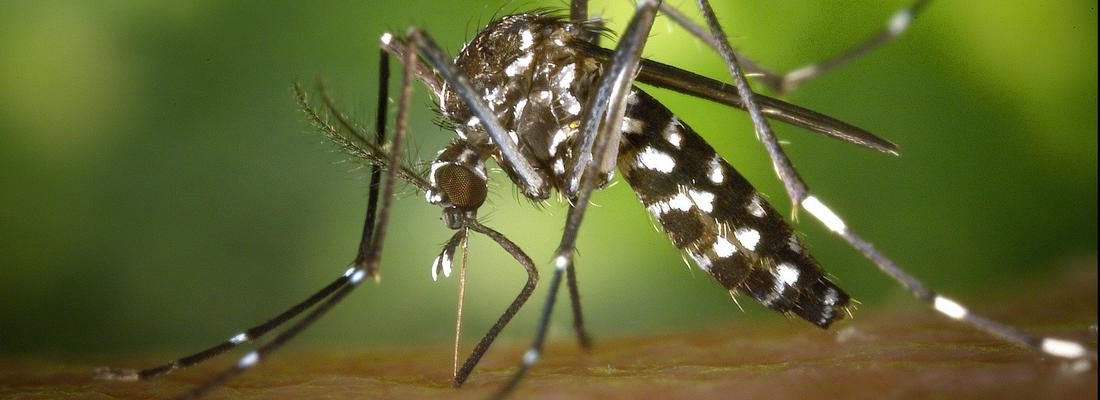
Citizen science provides a reliable and scalable tool to track disease-carrying mosquitoes
Recent outbreaks of Zika, chikungunya and dengue highlight the importance of better understanding the spread of disease-carrying mosquitoes across multiple spatio-temporal scales. Traditional surveillance tools are limited by jurisdictional boundaries and cost constraints. Here we show how a scalable citizen science system can solve this problem by combining citizen scientists’ observations with expert validation and correcting for sampling effort. Our system provides accurate early warning information about the Asian tiger mosquito (Aedes albopictus) invasion in Spain, well beyond that available from traditional methods, and vital for public health services. It also provides estimates of tiger mosquito risk comparable to those from traditional methods but more directly related to the human–mosquito encounters that are relevant for epidemiological modelling and scalable enough to cover the entire country. These results illustrate how powerful public participation in science can be and suggest citizen science is positioned to revolutionize mosquito-borne disease surveillance worldwide.
Publish information
| Authors: | Aitana Oltra; J R B Palmer; F Collantes; J A Delgado; J Lucientes; S Delacour; M Bengoa; R Eritja; F Bartumeus; |
| Publisher: | Nature |
| Year of publication: | 2017 |
Language
EnglishKeywords
Mosquitoes Public Health Environmental Monitoring Public Participation In Science And ResearchTheme
Research Design And Methods Reflections On ScienceCategory
Text : Scientific PublicationAudience
Policy & Decision MakersAbout branding
Card image by: WikiImages on Pixabay
Banner by: WikiImages on Pixabay